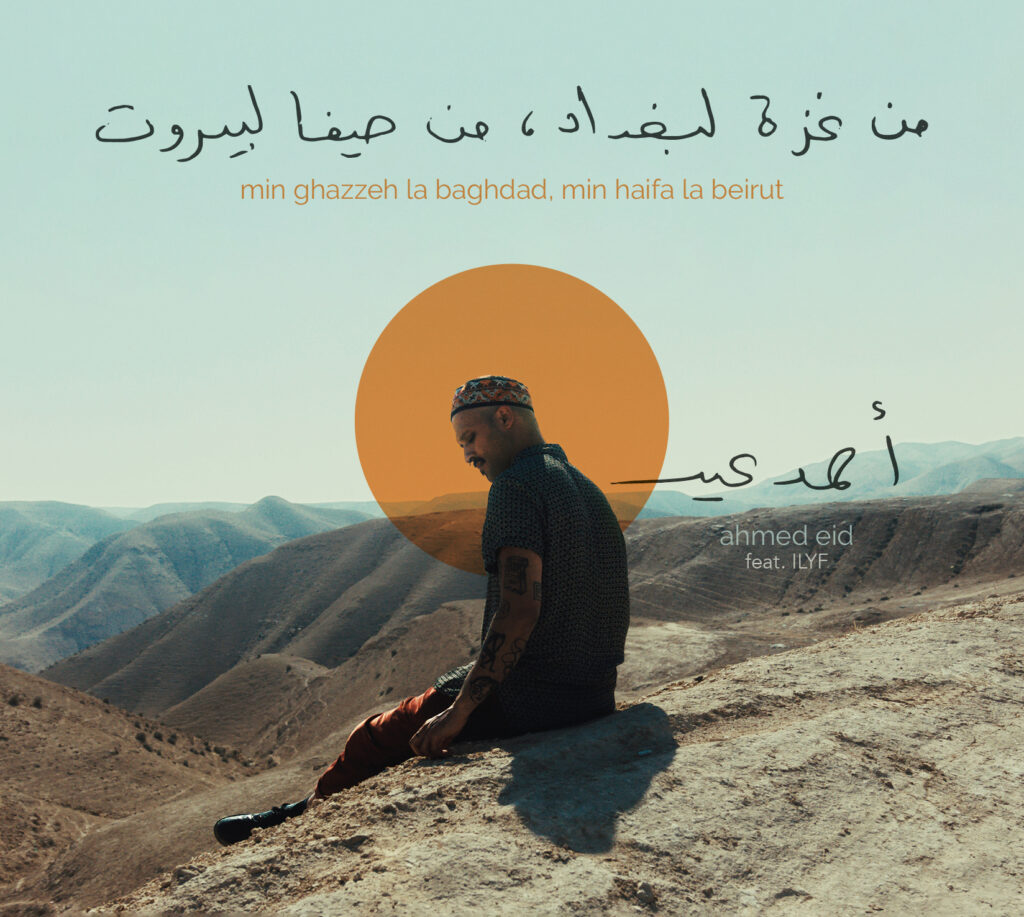
Min Ghazzeh La Baghdad, Min Haifa La Beirut is an album shaped by movement—across borders, memories, and emotional terrain. It functions less like a traditional record and more like a sonic map of the Arab world, tracing the threads that connect Gaza, Baghdad, Haifa, and Beirut despite the political ruptures between them. From the opening track, the album positions itself as a work of remembrance and resistance.
Musically, it blends traditional Arab instrumentation with contemporary electronic production. Oud, qanun, and ney lines intertwine with ambient textures and modern rhythmic structures, creating a sound that feels both ancient and current. This fusion isn’t ornamental; it reflects the lived reality of the region, where heritage and modernity coexist in tension and dialogue.
The vocal performances are the album’s emotional anchor. The singers deliver their lines with a raw, unfiltered intensity that prioritizes feeling over polish. Often, a voice enters alone before the arrangement expands around it, creating a sense of intimacy and vulnerability. The melismatic phrasing and microtonal nuances draw directly from regional musical traditions, grounding the album even as it experiments.
Lyrically, the album is steeped in themes of displacement, longing, and collective memory. Cities are invoked not just as physical locations but as emotional states—Gaza as grief, Baghdad as nostalgia, Haifa as yearning, Beirut as defiance. The title itself reads like a journey, a refusal to accept fragmentation.
The pacing is deliberate and effective. Early tracks are spacious and reflective, evoking distance and memory. Mid‑album, the energy intensifies: percussion grows more urgent, melodies more insistent, and the production more layered. The final tracks return to a quieter space, but with a sense of clarity earned through the emotional arc.
Instrumentally, the album is rich with detail. Traditional instruments provide grounding, while electronic elements expand the emotional palette. The percussion stands out for its rhythmic complexity and its subtle evocation of the musical identities of the cities referenced.



Leave a Reply